Place

Akhaltsikhe (Ahıska)

Other names: Ahıska, Akhaltsikhe, Ahaltsihe, Ahısha, Ahiska Kalesi, Rabati

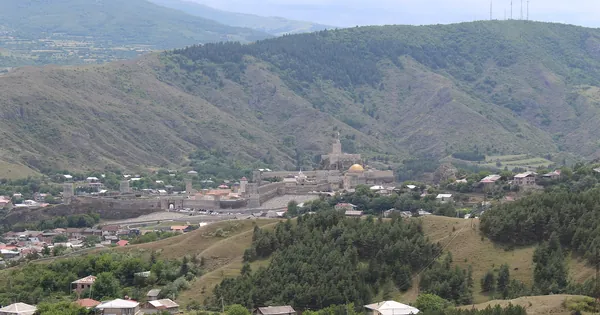
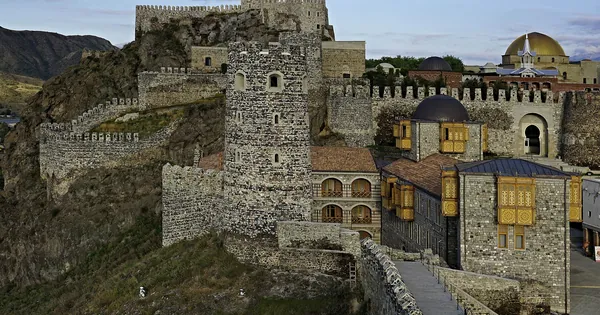
The centre of the Samtskhe Atabegate (Atabeg Yurt) and, after 1578, the principal town of the Ottoman Eyalet of Childir. Today it lies within the borders of Georgia; it is known for the Rabati Castle.

Atabeg Yurt From the Samtskhe Atabegate to the Ottoman Eyalet of Childir: periods, rulers, map and sources

Open on the live map

Akhaltsikhe lies on the upper course of the Kura, on the banks of the Potskhovi (Ahıska) River. From the end of the 13th century onward, as the seat of the Jaqeli atabegs, it became the political heart of Samtskhe.

In Turkish historiography, especially in the works of M. Fahrettin Kırzıoğlu, Akhaltsikhe and its surroundings are regarded as an important area of Kipchak settlement. It should be borne in mind that Turkish and Georgian researchers hold differing views on the ethnic composition of the region's population and on the origin of the "Ahıska (Meskhetian) Turks".

The town, which came under Ottoman rule after 1578, was ceded to Russia by the Treaty of Edirne (Adrianople) in 1829.

Sources

  • M. Fahrettin Kırzıoğlu, Yukarı-Kür ve Çoruh Boylarında Kıpçaklar, Ankara 1992
  • Cyril Toumanoff, Studies in Christian Caucasian History, Georgetown 1963
  • TDV İslâm Ansiklopedisi, "Ahıska" maddesi

Nearby entries

Publications mentioning “Akhaltsikhe (Ahıska)”

The Kipchak World

Oghuz and Kipchak Settlement in the Eastern Black Sea in the Middle Ages

The article discusses medieval Oghuz and Kipchak settlement in the Eastern Black Sea section (Artvin–Samsun) through ancient sources, the Seljuk–Danishmendid period, the Kipchaks who came via Georgia, migrations after the Mongol invasion, and place names and dialects. That the Christian population of the region was not solely of Greek origin…

Mehmet Özmenli 2016 2 min