The historical-comparative vocabulary of Kipchak Turkic on the basis of the Codex Cumanicus
Translated title; original title: Codex cumanicus temelinde Kıpçak Türkçesinin tarihi-karşılaştırmalı söz varlığı
A comprehensive doctoral study that re-transcribes the text of the Codex Cumanicus, provides its facsimile and gathers the Turkic words it contains in a historical-comparative dictionary.
- Thesis
- Doctoral thesis, Ege Üniversitesi, Sosyal Bilimler Enstitüsü, Türk Dili ve Lehçeleri Ana Bilim Dalı · Supervisor: Zeki Kaymaz
- Year
- 2015
- Added by
- Emre Emir
- On this site
- · 1 min read
This text is a translation of the Turkish original. Read the Turkish original
Abstract
The abstract is shown in the original language of the publication.
In this study, which we have prepared dissertation, historical Qipchaq Turkish text Codex Cumanicus was examined. Our study consists of four main sections: Introduction, Text, Facsimile and Historical-Comparative Lexicon. The part of Introduction contains information about the Codex Cumanicus and method of the study. The part of Text contains the transcription of Codex Cumanicus and interlinear imitation letters. The main part of our study constitutes Historical-Comparative Lexicon. In this part, given the index of Turkish words and comparative lexicon is made.
Editorial note
This doctoral thesis treats the Codex Cumanicus, regarded as the most important written document of Cuman-Kipchak Turkic, as a whole. The study combines a text edition with a lexicographical study; the record gives its start and end pages as 1–1924, which indicates the scale of the work.
- The thesis consists of four main sections: Introduction, Text, Facsimile and Historical-Comparative Vocabulary.
- The Introduction presents earlier studies on the Codex Cumanicus, the content of the work and the method followed.
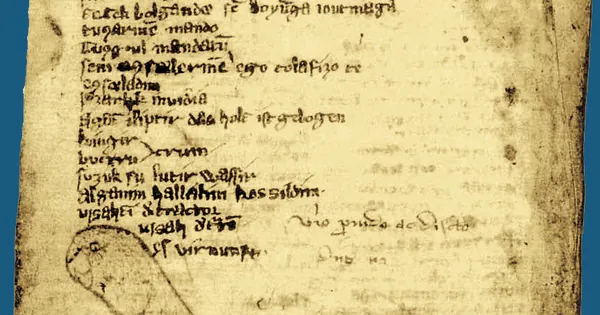
- The Text section gives the transcription of the work together with interlinear imitative letters; a facsimile is also appended.
- The main part of the thesis is an index of the Turkic words in the Codex and a comparison of these words with other periods and dialects of Turkic.
- The result is a comprehensive reference tool on the Kipchak vocabulary for researchers.
The record shows that the work is held in the YÖK National Thesis Centre under number 470426. The value of the thesis lies in bringing together both the reading and the vocabulary of the Codex Cumanicus in a single study; it serves as a fundamental reference work for linguists and historians working on Cuman Turkic.
Citation and access
- Thesis type: Doctoral
- Institution: Ege Üniversitesi, Sosyal Bilimler Enstitüsü, Türk Dili ve Lehçeleri Ana Bilim Dalı
- Supervisor: Zeki Kaymaz
- YÖK thesis no.: 470426
- Original record: hdl.handle.net
- Licence: info:eu-repo/semantics/openAccess (open access)
This page presents the citation details of the work, the author’s own abstract and our editorial board’s editorial note. For the full text, please consult the original record above; when quoting, cite the original publication.
Mentioned in this publication
Cite this publication
Erk, K. (2015). The historical-comparative vocabulary of Kipchak Turkic on the basis of the Codex Cumanicus [Doktora, Ege Üniversitesi, Sosyal Bilimler Enstitüsü, Türk Dili ve Lehçeleri Ana Bilim Dalı]. https://kipcaktarihi.com/en/yazi/the-historical-comparative-vocabulary-of-kipchak-turkic-on-the-basis-of-the-codex-cumanicus
Erk, Kutluay. “The historical-comparative vocabulary of Kipchak Turkic on the basis of the Codex Cumanicus.” Kıpçaklar, 2015. https://kipcaktarihi.com/en/yazi/the-historical-comparative-vocabulary-of-kipchak-turkic-on-the-basis-of-the-codex-cumanicus.
Erk, Kutluay. “The historical-comparative vocabulary of Kipchak Turkic on the basis of the Codex Cumanicus.” Kıpçaklar, 2015, https://kipcaktarihi.com/en/yazi/the-historical-comparative-vocabulary-of-kipchak-turkic-on-the-basis-of-the-codex-cumanicus.
Contribute to this publication
Have you spotted an error, or do you have information or a source to add? Send an update suggestion based on your own knowledge and sources. No account is needed; suggestions are reviewed by the author and the editorial board.
Want to edit the text directly? Log in with your account and edit in the panel or create a free account. Your changes are reviewed side by side; if accepted, your name will appear among the contributors.