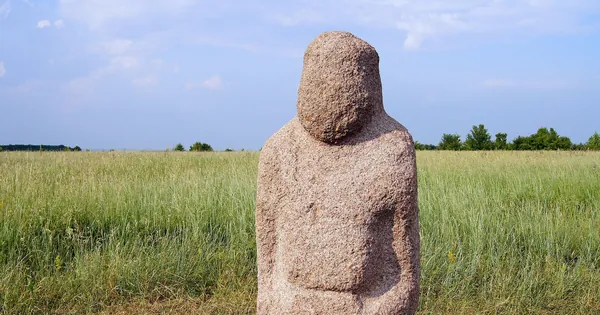
The Kipchak Khanate
Translated title; original title: Kıpçak Hanlığı
- Added by
- Emre Emir
- On this site
- · 2 min read

This text is a translation of the Turkish original. Read the Turkish original
A Turkish text by the Kazakh historian Bolat Kumekov describing the political structure of the Kipchak Khanate in the Eastern Dasht-i Kipchak in the 11th–13th centuries, the Elbörili dynasty, its military-administrative organisation, its relations with the Khwarazmshahs, its economy (stockbreeding, hunting, fishing) and its tribal composition (the 16 peoples of the eastern ulus). It recounts that the Kipchaks split into Eastern and Western branches in the mid-11th century, that the Kipchak Khanate was engaged in both conflict and kinship relations with the Khwarazmshahs, and that it encountered the Mongols at the beginning of the 13th century. It is emphasised that the Kipchaks formed the core of the Kazakh people.
Main findings of the work
- In the second half of the 11th century the Kipchaks drove the Oghuz yabghus out of the Aral–Caspian steppes and the Syr Darya; the name 'Dasht-i Kipchak' replaced 'the Oghuz steppe'.
- The Kipchak dynasty belonged to the Elbörili tribe; Ulugh Khan in the Delhi Sultanate also came from this tribe. (citing Juzjani)
- The military administration had two wings; the headquarters of the right wing was probably Saraychik in the Yaik basin, and that of the left wing Sighnaq.
- In 1096 the Kipchak union, led by Ulugh Khan, launched a campaign against Khwarazm.
- In 1133 the Kipchak ruler was defeated by the Khwarazmshah Atsiz; between 1145 and 1152 the Kipchaks were forced to cede Jend to Atsiz three times.
- The rulers of Khwarazm traditionally married women descended from the khans of the Kangli and the Kipchaks.
- In 1198 Muhammad Khwarazmshah campaigned in the Dasht-i Kipchak and defeated Kair Buku Khan.
- According to Ahmad al-Tini and al-Dimashqi, the eastern ulus consisted of 16 ethnic communities (8 principal, 8 minor).
- The Burcoğlu people are listed among the founders of the dynasty of the Mamluk sultans in Egypt.
- In the 11th–12th centuries the Kipchaks formed the core of the Kazakh people and were influential in the formation of the Kyrgyz, Karakalpak, Uzbek, Bashkir, Tatar and other peoples.
About this work
This page presents the work's citation details, the author(s)' abstract and a neutral summary prepared by our site; please consult the source in which the work was published for its full text. The points above summarise the information in the work, and the page numbers refer to the work.
Mentioned in this publication
Cite this publication
Kumekov, B. (2026). The Kipchak Khanate. Kıpçaklar. https://kipcaktarihi.com/en/yazi/the-kipchak-khanate
Kumekov, Bolat. “The Kipchak Khanate.” Kıpçaklar, 2026. https://kipcaktarihi.com/en/yazi/the-kipchak-khanate.
Kumekov, Bolat. “The Kipchak Khanate.” Kıpçaklar, 2026, https://kipcaktarihi.com/en/yazi/the-kipchak-khanate.
Contribute to this publication
Have you spotted an error, or do you have information or a source to add? Send an update suggestion based on your own knowledge and sources. No account is needed; suggestions are reviewed by the author and the editorial board.
Want to edit the text directly? Log in with your account and edit in the panel or create a free account. Your changes are reviewed side by side; if accepted, your name will appear among the contributors.